Leave Your Message

2026 Best Home Backup Inverter Options for Reliable Power Solutions?

In recent years, the demand for reliable power solutions has surged. Many homeowners recognize the significance of a robust Home Backup Inverter. According to industry reports, the global inverter market is expected to reach $13 billion by 2026. As power outages become more frequent, the importance of having a dependable backup system cannot be overstated.

Home Backup Inverters provide continuous power during outages, ensuring that essential appliances stay functional. They allow families to maintain their normal routines despite disruptions. However, not all inverters are created equal. Some may struggle under heavy loads or have limited battery life. This inconsistency highlights the need for a well-informed selection process when choosing a reliable inverter.

Investing in a quality Home Backup Inverter is not a decision to take lightly. Evaluating features such as capacity, efficiency, and installation requirements is crucial. For instance, some models may require professional installation, which can increase costs. Homeowners must balance their specific needs with the evolving technologies in the market to ensure they make the right choice.
2026 Best Home Backup Inverter Options for Reliable Power Solutions?

Home Backup Inverters: An Overview of Their Importance and Functionality

Home backup inverters play a vital role in maintaining power stability during outages. They convert DC power stored in batteries into usable AC power for homes. In recent years, the importance of backup inverters has grown significantly due to increased reliance on electronic devices. According to industry reports, nearly 30% of homeowners experienced at least one power outage last year. This trend highlights the need for reliable backup solutions.

Backup inverters are not just about providing power; they ensure that essential appliances remain functional. This includes refrigerators, medical devices, and communication tools. A smart choice can keep these systems running smoothly. However, selecting the right inverter can be challenging. Capacity, efficiency, and compatibility with existing power systems are crucial factors to consider.

Tip: Assess your energy needs carefully before making a purchase. A common mistake is underestimating the total power consumption of all devices.

Maintenance is also important. Regular checks can prevent failures during critical moments. Some users neglect this aspect. Ignoring signs of wear or damage can lead to unexpected problems.

Tip: Create a maintenance schedule. Simple tasks like battery checks can make a big difference.

2026 Best Home Backup Inverter Options for Reliable Power Solutions

Inverter Type Power Output (W) Battery Compatibility Efficiency (%) Peak Load Handling (W) Weight (kg)
Pure Sine Wave Inverter 2000 Lead Acid, Lithium-ion 90 4000 18
Modified Sine Wave Inverter 1500 Lead Acid 85 3000 15
Hybrid Inverter 3000 Lead Acid, Lithium-ion 95 6000 25
Inverter/Charger 2500 Lead Acid, Lithium-ion 88 5000 20

Key Features to Consider in Choosing the Best Backup Inverter

2026 Best Home Backup Inverter Options for Reliable Power Solutions?

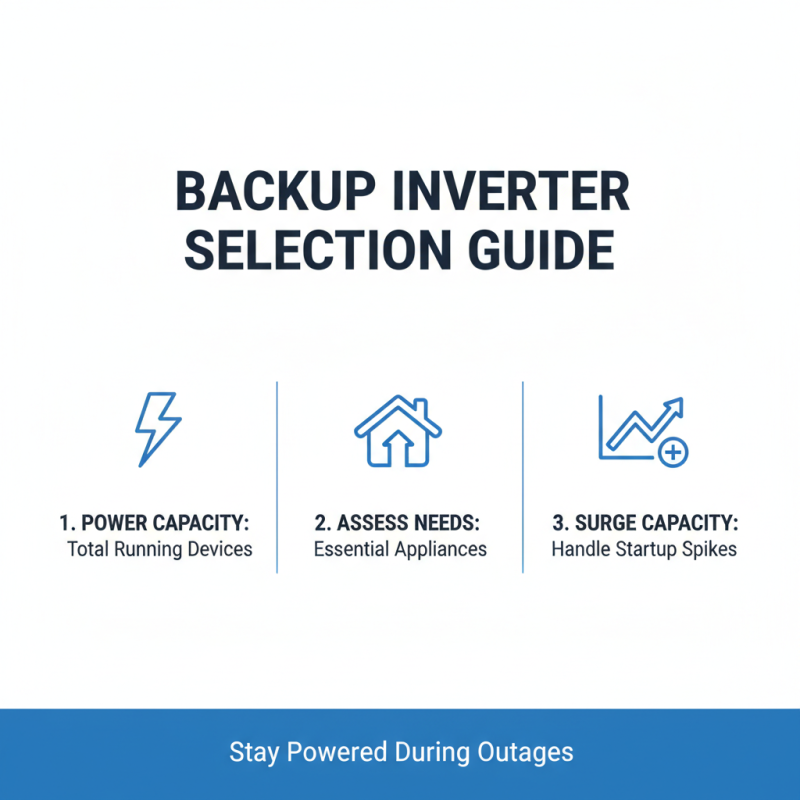
When selecting a backup inverter, consider its power capacity. This determines how many devices can run simultaneously. Assess your power needs based on the appliances you rely on during outages. Look for inverters that offer surge capacity. Many devices draw extra power at startup. Ensure your inverter can handle this demand.

Battery compatibility is another crucial factor. Choose an inverter that works with different battery types. Lithium-ion offers longevity, while lead-acid is more affordable. Evaluate the run time as well. Some inverters provide longer backup during blackouts. Think about your average power outage duration. Backup duration should suit lifestyle needs.

Efficiency matters too. An inverter’s efficiency rating affects overall performance. Higher efficiency saves on energy costs. No one enjoys high electricity bills, especially during emergencies. Additionally, consider the inverter's size and weight. A compact design is easier to install and move. Think about your available space for installation.

Top Home Backup Inverter Brands to Watch in 2026

The need for reliable power continues to grow. Many homeowners now look at backup inverters as essential. These devices help maintain power during outages. In 2026, several key players are making significant strides in the solar energy market. Their innovation promises better efficiency and durability.

As technology evolves, some brands have received attention for their products. Key features include ease of installation and user-friendly interfaces. Homeowners appreciate inverters with smart technology. They can monitor usage and performance in real-time. However, not every model is perfect. Some may struggle with extreme weather conditions or heavy loads.

Selecting the right inverter can be a challenge. It’s crucial to consider your unique power needs. Understanding wattage and energy consumption can be daunting. Consumers often overlook these factors. Yet, they are vital for optimal performance. In 2026, research will be key to making informed choices. Being proactive now can lead to better energy solutions down the line.

Comparative Analysis of Backup Inverter Performance and Efficiency

When assessing backup inverters, performance is crucial. An extensive study from the Energy Storage Association highlights that top inverters can achieve efficiency rates above 95%. This metric is essential for homeowners relying on backups during outages. Reliability of power is a major concern for many, especially in regions prone to blackouts. A high-efficiency inverter can handle power loads better, leading to improved energy savings.

Understanding the differences in inverter types is vital. Pure sine wave inverters typically offer superior performance for sensitive electronics. However, modified sine wave inverters, while cheaper, may not support all devices effectively. Each option has trade-offs that need careful consideration.

Tips: Select an inverter with a high continuous power rating. This means it can manage the load consistently. Also, consider the total harmonic distortion (THD) level. A lower THD ensures cleaner energy output. It's common for users to overlook these details, leading to potential performance issues. Reflecting on your specific power needs will guide your decision.

Installation and Maintenance Tips for Home Backup Inverters

2026 Best Home Backup Inverter Options for Reliable Power Solutions?

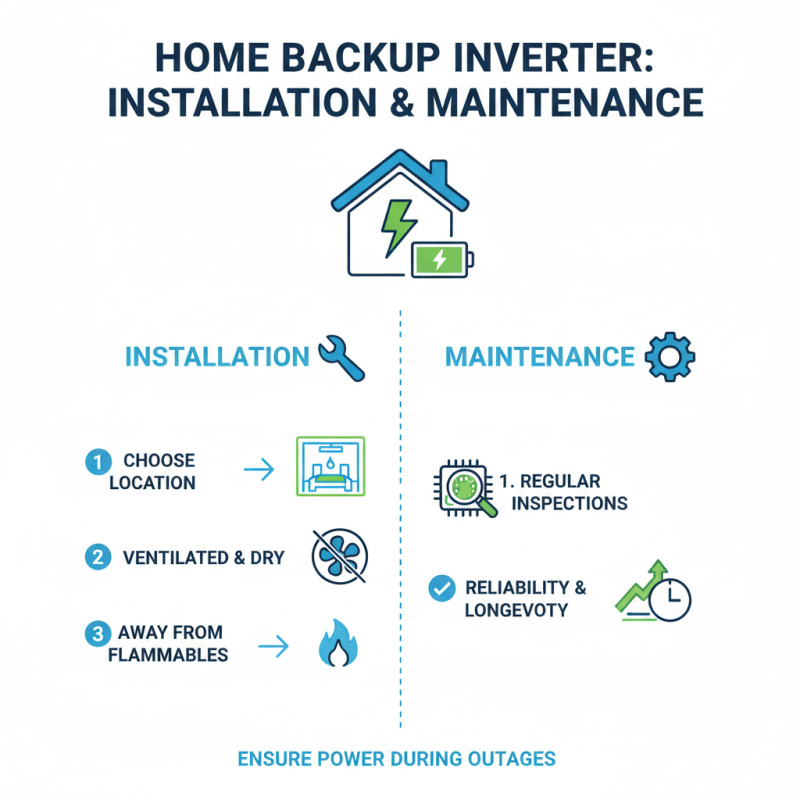
When considering home backup inverters, installation and maintenance are crucial. Proper setup ensures reliability during outages. Start by selecting a suitable location. The area should be well-ventilated and away from moisture. Avoid placing the inverter near flammable materials. Regular inspections are vital for longevity.

Tips: Check connections regularly. Loose wires can lead to inefficiency. Also, ensure the batteries are charged according to specifications. This helps avoid unexpected failures when power is needed most. Keep an eye on inverter displays. They can alert you to issues that may need attention.

Maintenance doesn’t stop at inspections. Cleaning dust and debris will enhance performance. A simple cloth can do wonders. If you notice any odd noises, investigate immediately. Ignoring these signs can lead to bigger problems down the road. Be proactive to ensure your backup power remains reliable.