Top 10 Inverters for Home Use Why Choose the Right One?
Choosing the right Inverter for Home Use can significantly impact your daily life. An inverter converts DC power to AC power, allowing you to run household appliances smoothly. This is essential, especially during power outages.
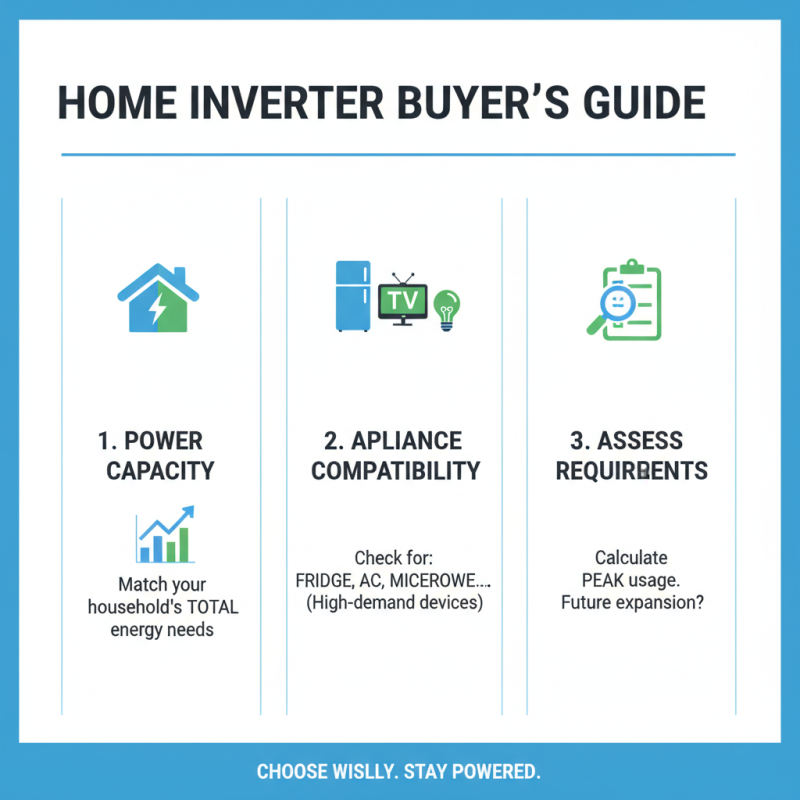
Homeowners often overlook the importance of a reliable inverter. Many choose an inverter based solely on price, without considering their specific needs. Power capacity is a crucial factor. You need to know how much energy your household requires. Failure to understand this can lead to frustrations.
Furthermore, not all inverters perform equally in different scenarios. Some may struggle with larger appliances, while others shine in efficiency. It is vital to assess your situation carefully. An informed choice ensures that you have the right inverter for your home needs.
Overview of Inverters and Their Importance for Home Use
Inverters play a crucial role in home energy management. They convert direct current (DC) into alternating current (AC), making it usable for household appliances. This process is vital for solar power systems, allowing homeowners to harness renewable energy efficiently. Understanding this can influence energy cost savings and environmental impact significantly.
Choosing the right inverter is often overlooked. Many people assume all inverters are the same. However, different models have unique features and efficiencies. Some inverters handle power surges better than others. This can prevent potential damage to delicate electronics. You might need to examine your energy needs carefully. Not doing so could lead to purchasing an underpowered model, which may disrupt your home’s energy flow.
Moreover, installation does matter. A poorly installed inverter can lead to inefficiencies and safety hazards. It's essential to consider not just the inverter's capabilities but its compatibility with your home’s wiring. Mistakes in this area can have lasting consequences, making careful evaluation critical. Think about how essential a reliable power supply is for daily life. Investing time in the right decision can pay off tremendously.
Key Features to Consider When Choosing an Inverter
Choosing the right inverter for home use is crucial. It can significantly affect your energy efficiency and overall satisfaction. When selecting an inverter, consider several key features.
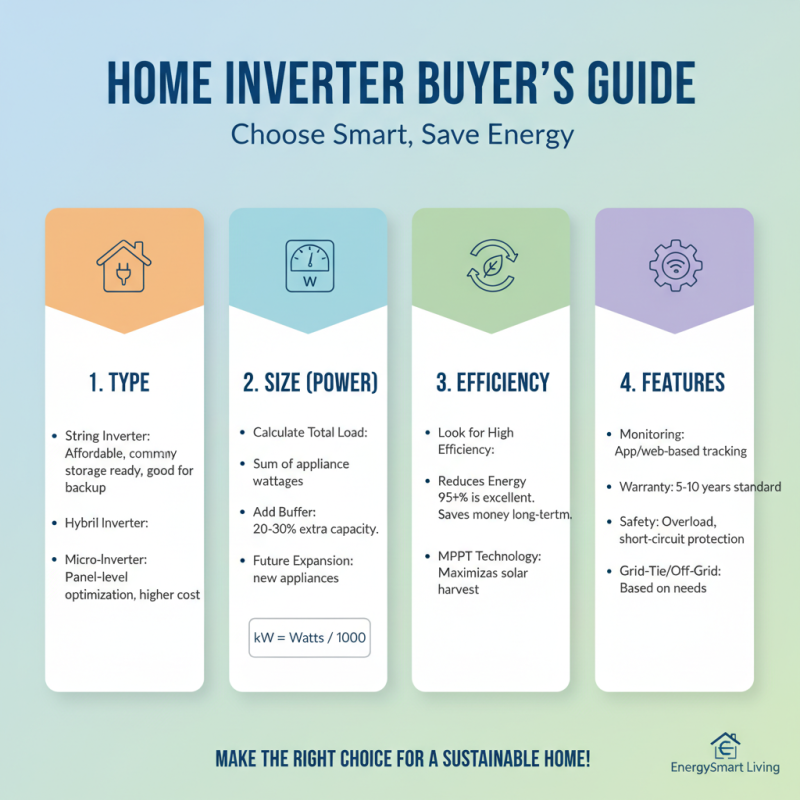
First, check the inverter's power capacity. It must handle your household appliances comfortably. A good rule is to calculate the total wattage of devices you want to power. According to industry data, inverters typically vary from 300 watts to over 5000 watts. Ensure you choose one that meets your specific needs.
Efficiency is another vital factor. Look for inverters with high efficiency ratings, ideally above 90%. This rating reflects how well the inverter converts DC power to AC power. Higher efficiency means lower energy loss. Consider the noise level as well. Some inverters can be quite loud, affecting your home environment.
**Tip**: Pay attention to the inverter’s features. Many come with built-in protection against overload, short circuits, and overheating. Such features prolong the life of the inverter and safeguard your appliances.
Battery compatibility is essential too. An inverter should work seamlessly with your batteries, whether lead-acid or lithium-ion. This compatibility can enhance performance and prevent potential issues.
**Tip**: Check reviews and reports on inverter performance. Some models may not live up to their claims. Gathering information from multiple sources can provide clarity. It's often worth the time to compare options carefully.
Types of Inverters Suitable for Residential Applications
Choosing the right inverter for home use is crucial. Different types serve various needs. Understanding these types helps make informed choices. Solar inverters are popular for homeowners. They convert DC electricity generated by solar panels into AC power. This allows for home use and grid connection.
Battery inverters also play a vital role. They store energy from renewable sources or the grid. This stored energy can be used during power outages. According to a recent industry report, the global battery inverter market is expected to grow by 20% annually. This growth reflects an increasing demand for energy storage solutions.
However, not all inverters perform equally. Some may lack efficiency. The efficiency rating of an inverter influences energy loss during conversion. Reports indicate that many homeowners overlook this. They might choose based solely on price. This decision can lead to higher long-term costs. Reflect on your power needs and future energy goals before making a choice.
Top 10 Inverters for Home Use - Types of Inverters Suitable for Residential Applications
| Inverter Type |
Output Power (W) |
Efficiency (%) |
Features |
Ideal Use |
| String Inverter |
2500 - 10000 |
95 - 98 |
Easy installation, cost-effective |
Residential rooftops |
| Micro Inverter |
150 - 300 |
95 - 96 |
Individual panel optimization |
Shaded roofs, varying panel orientations |
| Power Optimizer |
300 - 600 |
95 - 97 |
Combines benefits of string inverters and micro inverters |
Optimizing performance in partial shade |
| Hybrid Inverter |
3000 - 10000 |
95 - 98 |
Integrates battery storage |
Solar systems with energy storage |
| Off-grid Inverter |
1000 - 5000 |
90 - 94 |
Self-sufficient, battery charging |
Remote areas without grid access |
| Grid-tie Inverter |
1000 - 5000 |
95 - 97 |
Sells excess power back to the grid |
Connected to main grid systems |
| Central Inverter |
10000 - 150000 |
96 - 98 |
High capacity for large installations |
Commercial and industrial applications |
| Bi-directional Inverter |
3000 - 6000 |
95 - 98 |
Allows both charging and discharging |
Home energy management systems |
| Programmable Inverter |
1000 - 5000 |
94 - 96 |
Customizable settings for different needs |
Smart homes and variable load systems |
Common Mistakes to Avoid When Selecting an Inverter
When selecting an inverter, many people make common mistakes. One major mistake is not understanding their power needs. It’s crucial to assess how much power your home appliances require. This way, you can choose an inverter that meets those demands. Ignoring this step may lead to insufficient power supply during an outage.
Another mistake is underestimating inverter types. Some inverters are designed for specific applications. If you pick the wrong kind, it could cause issues down the line. Research the types available. Look for options like pure sine wave and modified sine wave inverters. Understand the differences before making a purchase.
Tips: Always read user reviews before buying. It can help reveal potential problems. Consider the inverter's efficiency rating. A higher rating means lower operating costs. Also, remember installation requirements. Improper installation can lead to system failures. Be aware and plan accordingly to avoid costly errors.
Top 10 Inverters for Home Use
This chart illustrates the efficiency ratings of the top 10 inverters suitable for home use. Choosing the right inverter ensures optimal performance and energy savings.