- Home
- About Us
- Products
- Total Solution
- News
- Blog
- Contact Us
Leave Your Message
-
-
Phone
-
E-mail
-
Whatsapp
-
Whatsapp

Choosing the best Inverter for RV use is not simply a matter of buying the highest wattage. A microwave may demand 1,200 watts, while a refrigerator compressor needs extra starting power. A weak inverter can shut down beside a quiet campsite, exactly when breakfast begins.
Mike Sokol, a respected RV electrical-safety educator, offers a practical warning: “Electricity doesn’t forgive guessing.” His point matters here. Pure sine wave models usually suit sensitive electronics, induction cookers, medical equipment, and modern chargers. Modified sine wave units can cost less, but some appliances may run noisily, inefficiently, or unreliably. Inverter-chargers add battery charging and automatic transfer functions. Portable models provide flexibility, while hardwired systems deliver cleaner power throughout the coach.
Details decide performance. A 2,000-watt inverter may support a coffee maker, but not necessarily an air conditioner. Battery chemistry matters. Cable length matters. Ventilation matters too. A lithium battery bank can deliver strong current, but improper installation still creates heat and risk. The best choice depends on appliance loads, battery capacity, camping habits, and whether the RV uses 30-amp or 50-amp service.
This guide compares ten common inverter types for RVs. It examines real advantages, limitations, installation demands, and likely ownership costs. The ranking is useful, but not perfect. Some readers may value silence, while others need emergency backup power. There is no universal winner. The right Inverter for RV should fit the entire electrical system, not just one appliance.
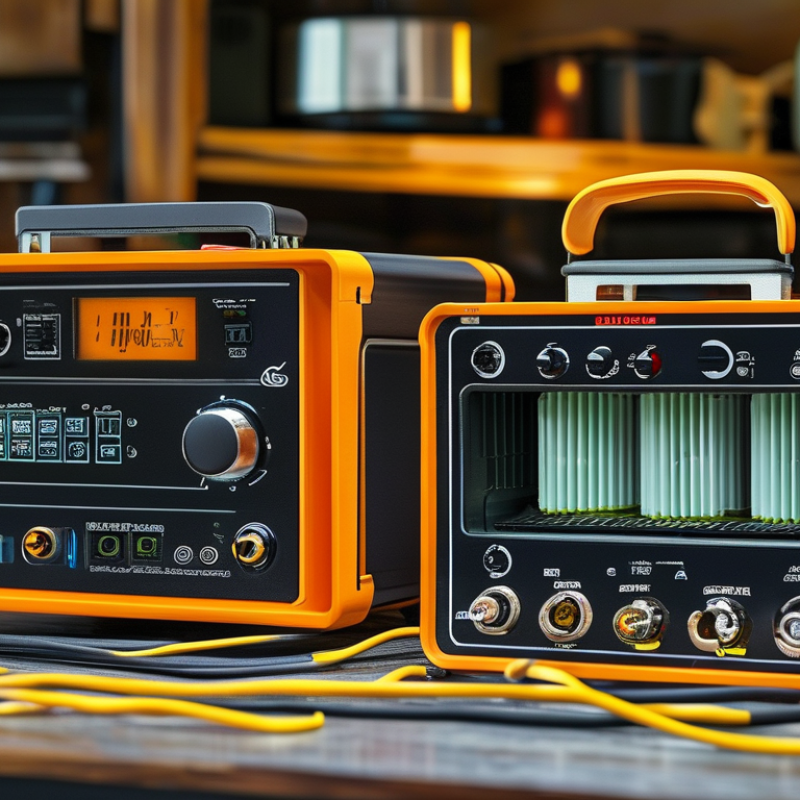
An RV inverter can be classified by waveform, function, and installation method. Pure sine wave models deliver utility-like power for medical equipment, induction cookers, and sensitive chargers. Modified sine wave models cost less, but may create buzzing, heat, or unstable performance. Choose carefully.
Function creates more categories. Stand-alone inverters supply AC power from a battery. Inverter-chargers also recharge batteries from shore power. Hybrid units combine battery, solar, and external AC inputs. Solar-input inverters manage photovoltaic energy, while modular units can operate in parallel for higher loads. Installation adds four practical types: portable plug-in units, fixed hard-wired units, under-seat low-profile units, and transfer-switch-integrated units. One product may fit several classes. That distinction matters.
The RV Industry Association reported 342,220 wholesale shipments in 2024, showing continued demand for dependable mobile power systems. More RV owners now run induction cookers, laptops, routers, and compact appliances away from campsites. Real-world testing still matters more than marketing claims. Check continuous output, surge capacity, idle consumption, cable length, ventilation, and battery chemistry. The National Electrical Code and RV safety guidance require careful overcurrent protection and secure wiring. IEC 62109 also provides a recognized safety framework for power-conversion equipment. Portable units are convenient, but loose cables can become trip hazards. Fixed systems look cleaner, yet installation errors can damage batteries or electronics. The data is not perfect. A lower-priced inverter may work well for lights, but fail under compressor startup.
| No. | Inverter Type | Main Classification | Output and Typical Rating | Suitable RV Loads | Key Advantages | Main Limitations | Best RV Use |
|---|---|---|---|---|---|---|---|
| 1 | Pure Sine Wave Inverter | Waveform Clean AC output | Smooth sine-wave power, normally 120 V AC in North American RVs; commonly available from approximately 300 W to 3,000 W or more. | Laptops, televisions, chargers, refrigerators, induction appliances, medical equipment, and motors. | Highest compatibility; low electrical noise; reliable motor starting; recommended for sensitive electronics. | Usually costs more and may be less compact than modified-sine designs. | Full-time RV living, sensitive equipment, residential-style appliances, and quiet off-grid operation. |
| 2 | Modified Sine Wave Inverter | Waveform Stepped AC output | A stepped approximation of a sine wave; commonly sold in smaller and mid-range power ratings. | Basic phone chargers, incandescent lighting, simple heating loads, and some non-sensitive appliances. | Lower purchase price; simple design; adequate for some basic resistive loads. | Motors may run hotter or noisier; some chargers, audio equipment, refrigerators, and electronic controls may malfunction or run inefficiently. | Occasional use with basic loads when budget is more important than broad compatibility. |
| 3 | Square Wave Inverter | Waveform Basic switched output | A square-wave AC output with abrupt voltage transitions; uncommon in modern RV equipment. | Only very simple resistive loads may tolerate it, such as some basic heating elements. | Simple circuitry and potentially low manufacturing cost. | Poor compatibility, high harmonic content, audible noise, excess motor heating, and possible damage to sensitive electronics. | Generally not recommended for RV use; mostly relevant as a historical or educational category. |
| 4 | Off-Grid Inverter | Function Stand-alone DC-to-AC conversion | Converts battery power to AC without requiring a utility-grid connection; output may be pure or modified sine wave. | AC outlets, televisions, kitchen appliances, tools, and other loads within the battery and inverter limits. | Works independently at campsites; well suited to battery-based RV electrical systems. | Cannot export power to a utility grid; requires adequate battery capacity, cabling, ventilation, and protection. | Boondocking, dry camping, and solar-plus-battery RV systems. |
| 5 | Grid-Tie Inverter | Function Utility-synchronized conversion | Converts DC electricity to AC synchronized with the utility grid; normally requires certified anti-islanding protection. | Grid-connected solar installations rather than isolated RV outlets. | Can feed surplus solar energy into an approved electrical grid connection where regulations allow. | Shuts down when the grid is unavailable; not suitable as a stand-alone RV backup inverter unless paired with an approved hybrid system. | Permanently parked RVs or mobile structures with a compliant utility-connected solar installation. |
| 6 | Hybrid Inverter | Function Multi-source energy management | May combine inverter, battery charger, transfer switching, solar charging, and limited energy management in one unit. | RV branch circuits, battery-backed outlets, solar loads, and selected high-priority appliances. | Integrates several functions; can coordinate shore power, generator power, solar input, and batteries. | More complex setup; higher cost; configuration and electrical-code requirements vary by system. | Advanced RV electrical systems needing automatic source selection and battery backup. |
| 7 | Inverter-Charger | Function Inverter plus battery charging | Provides AC from batteries and charges the battery bank from shore power or a generator; many models include a transfer switch. | Existing RV AC circuits, refrigerators, entertainment equipment, chargers, and selected appliances. | Automatic changeover and battery charging; reduces the number of separate components. | Charger current, battery chemistry, transfer-switch capacity, and neutral-to-ground design must match the RV system. | Hardwired RV systems that need seamless shore-power backup and integrated charging. |
| 8 | Portable Plug-In Inverter | Installation Temporary connection | Usually a compact 12 V DC unit with AC receptacles; typical continuous ratings range from about 100 W to 1,000 W. | Phones, tablets, cameras, laptops, small televisions, and other low-power devices. | Easy to move, quick to use, and does not require permanent RV wiring. | Limited output; unsuitable for most air conditioners, electric water heaters, microwaves, and large compressors; plug and socket current limits apply. | Short trips, emergency charging, and occasional low-power use. |
| 9 | Hardwired RV Inverter | Installation Permanent AC integration | Connected directly to the battery bank and selected AC circuits; commonly rated from approximately 1,000 W to 3,000 W or higher. | Multiple outlets, refrigerators, entertainment systems, kitchen appliances, and designated branch circuits. | Higher capacity, cleaner cable routing, better load management, and possible automatic transfer switching. | Requires correct overcurrent protection, disconnects, grounding, ventilation, battery cables, and professional installation where necessary. | Frequent boondocking and RV owners who want selected onboard outlets to remain powered. |
| 10 | Split-Phase or Dual-Voltage Inverter System | Installation / Output System-level configuration | Produces two synchronized AC legs for systems designed for higher voltage or larger combined loads; exact voltage depends on the RV electrical architecture. | Specialized high-power equipment and selected residential-style circuits, when the RV is designed and wired for it. | Can support larger balanced loads and more flexible distribution than a single-output system. | Unnecessary for most RVs; requires compatible service equipment, careful phase balancing, and code-compliant installation. | Large motorhomes or stationary RV installations with higher-capacity electrical distribution. |