Leave Your Message

Top 10 Best LiFePO4 Inverters for Global Buyers?

Choosing the right LiFePO4 Inverter is more complex than comparing prices or advertised wattage.

Global buyers face different electrical standards, climates, installation practices, and after-sales conditions. A unit that performs well in a dry Australian workshop may struggle in a cold European garage. Port compatibility matters too. So does surge capacity.

This guide, “Top 10 Best LiFePO4 Inverters for Global Buyers,” examines practical factors that influence daily performance. These include continuous output, peak power, conversion efficiency, battery communication, cooling design, protection features, certifications, warranty terms, and service availability. We also consider whether manufacturers publish clear manuals and realistic technical data.

Battery educator John D. Kelly has often emphasized, “Lithium batteries are not drop-in replacements.” That warning is important. A reliable inverter must communicate correctly with the battery management system. It should also handle charging limits, low-temperature protection, and sudden load changes without unnecessary shutdowns.

Real-world details matter. Think of a refrigerator starting at midnight, a pump drawing power during a voltage dip, or a solar system operating inside a hot utility cabinet. Numbers alone cannot explain those moments.

Our comparison aims to separate useful engineering from attractive marketing. Still, no ranking is perfect. Regional support information can be incomplete, and manufacturer specifications may use different testing conditions. Buyers should verify local requirements before purchasing.

The selected models represent different budgets, capacities, and use cases. Some prioritize efficiency. Others offer stronger monitoring or easier installation. The best LiFePO4 Inverter depends on the whole energy system, not one impressive feature.
Top 10 Best LiFePO4 Inverters for Global Buyers?

What Is a LiFePO4 Inverter and How Does It Work?

What Is a LiFePO4 Inverter and How Does It Work?

A LiFePO4 inverter is not a special inverter chemistry. It is a power-conversion system designed for lithium iron phosphate batteries. The battery stores direct current, or DC. Household appliances usually need alternating current, or AC. Inside the inverter, semiconductor switches transform DC into a rapidly pulsed waveform. A filter smooths that waveform into usable AC. The control board regulates voltage and frequency, often at 50 or 60 hertz. It also monitors temperature, current, and battery voltage.

That protection matters. LiFePO4 cells typically have a nominal voltage of 3.2 volts. Four cells form a common 12.8-volt battery. Actual output changes with load, temperature, charge level, cable loss, and inverter efficiency. A larger battery does not automatically deliver more power. Continuous and surge ratings still control performance.

IEA’s Global EV Outlook 2024 reported strong LFP adoption. LFP reached about 40% of the global electric-car battery market in 2023. It represented roughly 7% in 2020. This growth reflects cost and durability advantages, but it does not remove design risks. U.S. Department of Energy storage guidance emphasizes controls, thermal management, and system testing. Installers often find undersized cables and poor ventilation create unexpected problems. A specification sheet can mislead. Check idle consumption, transfer time, waveform quality, certification, and low-temperature charging limits before comparing systems. Some batteries stop charging below freezing without heating protection.
Top 10 Best LiFePO4 Inverter Configurations for Global Buyers

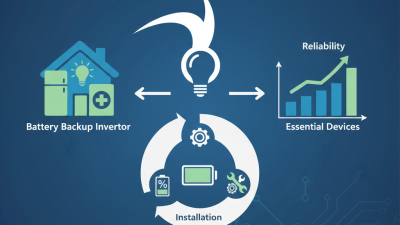
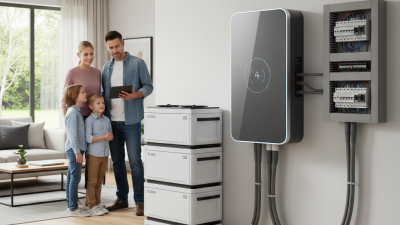
LiFePO4 inverters convert the battery’s direct current (DC) into alternating current (AC) for household and commercial loads. The chart compares common battery configurations used with inverters by nominal voltage and stored energy.

How to read the chart: Stored energy is calculated as nominal voltage × battery capacity in amp-hours ÷ 1,000. Actual usable energy is typically lower because of inverter conversion losses, battery protection limits, temperature, and recommended depth of discharge.

Key Features for Comparing LiFePO4 Inverters Worldwide

Top 10 Best LiFePO4 Inverters for Global Buyers?

Comparing LiFePO4 inverters requires more than checking rated watts. The IEA’s 2024 Batteries and Secure Energy Transitions report notes that LFP batteries exceeded 40% of the global electric vehicle battery market in 2023. Their safety and cost advantages are clear, but inverter compatibility still matters. Check the battery voltage range, continuous output, surge capacity, and communication protocols. CAN or RS485 support helps the inverter read state of charge accurately. Without it, charging may become less efficient or less safe.

Efficiency deserves careful attention. A claimed 98% peak efficiency may apply only under ideal load conditions. Real homes often run refrigerators, pumps, and small electronics at changing loads. Compare European, CEC, or weighted efficiency figures instead. Also inspect MPPT voltage ranges, transfer time, cooling design, and low-temperature charging protection. For international use, verify grid-code support and safety compliance, including IEC 62109 requirements. The IEA also highlights that LFP has lower energy density than some chemistries, so cabinet size and installation space can surprise buyers.

Tips: Request a complete test sheet, not a marketing page. Confirm whether surge power lasts for seconds or milliseconds. Check IP protection for humid areas. Ask about firmware updates, local service, and warranty exclusions. A cheaper inverter can become expensive after one failed board. I may be overly cautious, but unclear data should count as a warning.

Top 10 LiFePO4 Inverters for Different Global Applications

Top 10 Best LiFePO4 Inverters for Global Buyers?

A useful top-ten list should match real applications, not marketing claims. The ten strongest categories include home backup, RV travel, remote cabins, farms, telecom sites, marine systems, small clinics, mobile workstations, commercial peak shaving, and solar microgrids. LiFePO4 batteries suit these roles because they offer stable thermal performance and many operating cycles. The IEA Global EV Outlook 2024 reported that LFP batteries represented about 40% of global electric-car battery deployment in 2023. That scale supports wider supply and technical confidence. Still, battery quality varies greatly.

For a home, choose a pure sine-wave inverter with 3–5 kW continuous output and surge capacity for pumps or refrigerators.

A farm may need stronger overload handling, dust protection, and generator integration. Telecom equipment values quiet operation and dependable low-voltage shutdown. Marine users need corrosion resistance and compact cooling. NREL’s 2024 Annual Technology Baseline shows that storage economics depend heavily on system design, not cells alone. My ranking would change by climate, cable length, and load pattern. No list is perfect. That deserves honesty.

Tips: Check the inverter’s continuous rating, not only its peak figure.

Leave headroom for motor starts. Confirm charging voltage with the battery maker. In hot regions, ventilation matters more than a glossy efficiency claim. IRENA’s storage cost reports also emphasize installation and balance-of-system costs. A cheaper unit can become expensive after rewiring, protection devices, or service delays. Keep records of temperature, daily energy use, and fault codes. These small details often reveal a poor match before failure.

Safety, Compatibility, and Performance Comparison

Top 10 Best LiFePO4 Inverters for Global Buyers?

For a global top-ten shortlist, safety must outrank peak wattage. LiFePO4 cells usually offer strong thermal stability, but poor installation still creates hazards. The IEA’s Global EV Outlook 2024 reported that LFP batteries represented about 40% of the global electric-car battery market in 2023. That growth does not remove the need for protection. Look for certified overvoltage, overcurrent, short-circuit, and thermal controls. IEC 62109-1 and IEC 62109-2 provide useful inverter safety benchmarks. Certification scope still varies by country.

Compatibility deserves practical testing. The inverter should communicate with the battery management system through CAN or RS485. It also needs adjustable charge voltage, low-temperature charging protection, and programmable shutdown limits. Check 12V, 24V, or 48V system matching carefully. A connector can fit and still communicate poorly.

Grid-connected buyers should verify local requirements, including anti-islanding and voltage-frequency settings. UL 1741, IEC 62109, and regional grid codes may not be interchangeable.

Performance comparisons should use continuous output, surge duration, idle consumption, and efficiency at realistic loads. NREL’s 2024 Annual Technology Baseline models approximately 85% round-trip efficiency for lithium-ion storage systems, reminding buyers that system losses matter. Peak efficiency figures can mislead. Test a refrigerator start-up, a pump, and a steady 500-watt load. I would also inspect warranty exclusions and service response times. That part is often overlooked. No ranking remains perfect across every climate, battery pack, and electrical code.

How to Choose the Right LiFePO4 Inverter for Your Needs

How to Choose the Right LiFePO4 Inverter for Your Needs

Choosing a LiFePO4 inverter starts with your actual loads, not a glossy power rating. List refrigerators, pumps, computers, and heating devices. Note both running watts and startup surges. A refrigerator may run quietly but demand several times more power briefly. Surge matters.

The IEA’s Batteries and Secure Energy Transitions report estimates global battery storage must expand from about 86 GW in 2023 to 1,200 GW by 2030 under its net-zero pathway. That growth makes efficiency, safety, and serviceability more important for global buyers.

Compare continuous output, peak surge duration, and low-voltage shutdown settings. NREL’s 2024 battery-storage modeling commonly uses round-trip efficiency near 85% to 95%. In real homes, wiring losses, heat, and standby consumption reduce results. Sometimes, dramatically.

Check compatibility with your battery voltage, charging limits, and communication protocol. A 48-volt system can reduce cable current, but only when the battery and inverter support the same voltage range. Look for recognized safety testing, including IEC 62109 or equivalent regional requirements.

Confirm grid frequency, input voltage, islanding protection, and local certification before ordering. A cold garage also matters; LiFePO4 batteries may restrict charging near freezing.

I would not choose the largest inverter automatically. Oversizing can increase idle losses and cost.
Start with the load. Then test the assumptions.