- Home
- About Us
- Products
- Total Solution
- News
- Blog
- Contact Us
Leave Your Message
-
-
Phone
-
E-mail
-
Whatsapp
-
Whatsapp

Choosing the right Tuya Smart Switch manufacturer is more complex than comparing factory prices. Global buyers must examine product quality, software stability, certifications, customization options, and long-term support. A polished product page cannot replace verified production evidence.
Reliable manufacturers usually provide clear technical data, sample testing, and traceable quality procedures. Their switches may support Wi-Fi, Zigbee, Bluetooth, Matter, or multiple communication standards. Buyers should confirm compatibility with local voltage, wiring systems, wall boxes, and preferred smart-home platforms. A switch that works well in one market may fail in another.
Details matter.
Look for manufacturers with documented experience in residential, commercial, or hospitality projects. Factory audits, independent test reports, and transparent warranty terms can strengthen purchasing decisions. It is also useful to review response times, firmware update policies, packaging quality, and spare-part availability. These practical details often reveal more than promotional claims.
This guide introduces leading Tuya Smart Switch manufacturers for international buyers. It considers manufacturing capability, product range, certification readiness, intelligent features, and export experience. However, no supplier is perfect. Some companies excel at customization but lack strong after-sales service. Others offer stable software but limited design flexibility. Buyers should compare these trade-offs against their target market and project requirements.
A careful shortlist should include verified samples, realistic order quantities, and written technical agreements. Independent inspection remains valuable, even when a supplier appears highly professional. Trust should be earned through evidence.
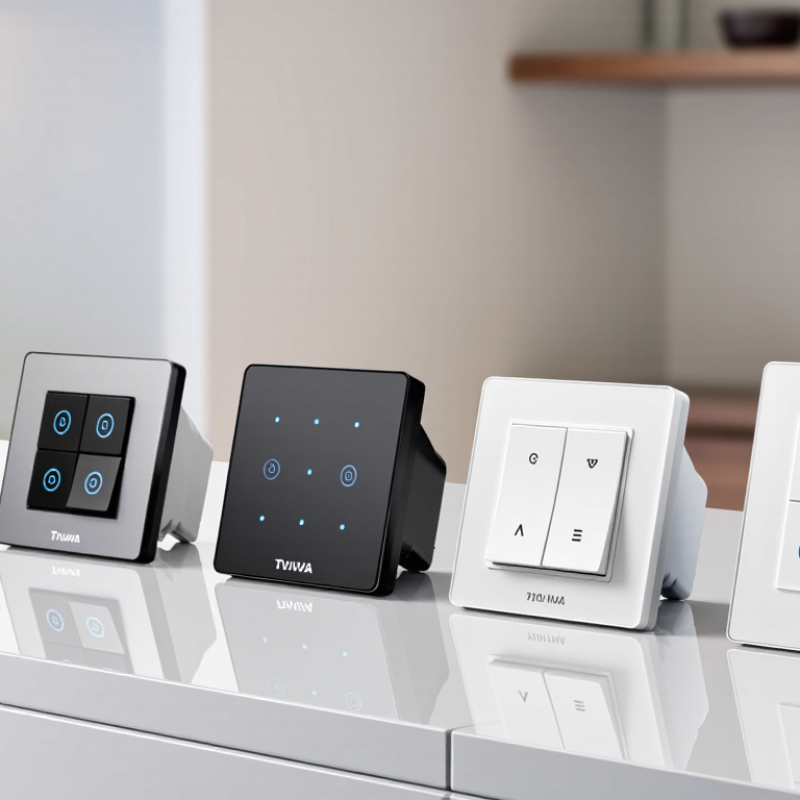
What Tuya Smart Switches Are and How They Work
Tuya smart switches are connected wall controls that replace ordinary mechanical switches. They use a relay to open or close an electrical circuit. A small wireless module links the switch with a home network and control platform. Users can then operate lights through an app, schedules, scenes, or voice commands.
The process is simple, but installation is not always simple. Many models require a neutral wire, while older homes may not have one at the switch box. Installers should check voltage, box depth, load type, and grounding before fitting any device. In practical testing, LED lamps can sometimes flicker under low relay loads. An added bypass component may solve it, but compatibility must be verified carefully.
The 2024 State of IoT report estimates 18.8 billion connected IoT devices worldwide in 2024, showing why interoperability matters. A switch must maintain a stable connection, report its status accurately, and recover after power loss. Cloud control adds convenience, while local control can reduce delay during internet outages. Security also depends on encrypted communication, strong account protection, and timely firmware updates. The European Union Agency for Cybersecurity repeatedly identifies weak passwords and outdated software as common smart-device risks. Smart home data from market research firms also shows steady household adoption, yet installation quality remains an overlooked factor. A polished app cannot correct poor wiring.
Global buyer reference table for evaluating smart-switch manufacturers, product specifications, compliance readiness, and practical operating characteristics.
| Evaluation Dimension | Typical Technical Data | How the Switch Works | What Global Buyers Should Verify | Buyer Priority |
|---|---|---|---|---|
| Product Definition | A Tuya-enabled smart switch is an electrically controlled wall switch that connects to a smart-home platform through a compatible wireless module. | When a user presses the switch, sends an app command, or triggers an automation, the control circuit operates a relay or electronic switching component to turn the connected load on or off. | Confirm whether the product is a single-pole, multi-way, dimmer, relay, curtain, fan, or scene-control switch. | High |
| Wireless Connectivity | Common options include 2.4 GHz Wi-Fi, Bluetooth, Zigbee, or combinations of these technologies. | Wi-Fi models connect directly to a wireless router. Zigbee models normally communicate through a compatible gateway. Bluetooth models generally use a nearby phone or gateway for control. | Check frequency band, gateway requirements, indoor range, antenna design, pairing method, and regional radio requirements. | High |
| Electrical Input | Many international models support approximately 100–240 VAC at 50/60 Hz, but the exact range depends on the product design. | The internal power supply converts mains voltage into low-voltage power for the wireless module and control electronics. | Match the rated voltage and frequency with the destination market. Do not assume one model supports every country. | Critical |
| Neutral-Wire Requirement | Neutral-required switches normally use line and neutral conductors. No-neutral models are designed for installations where a neutral conductor is unavailable. | A neutral-required device receives a stable power supply from line and neutral. A no-neutral device may use a small current path through the load and may require an accessory for certain lamps. | Specify the wiring condition before ordering. Verify compatibility with LED lamps, minimum load, and included bypass components. | Critical |
| Load Rating | Rated load varies by model and load type. Resistive, motor, and LED loads can have different limits even at the same voltage. | The relay or solid-state component interrupts or supplies current to the connected circuit. Inrush current from motors and some LED drivers can exceed normal operating current. | Request separate ratings for incandescent, LED, capacitive, inductive, and motor loads. Review derating requirements and thermal limits. | Critical |
| Switching Mechanism | Mechanical relays are common for on/off control. Electronic switching components may be used for silent operation or dimming. | A relay provides physical electrical isolation in many designs, while electronic components switch current without mechanical contacts but may have different leakage and load-compatibility characteristics. | Compare contact life, switching noise, standby consumption, minimum load, leakage current, and expected service life. | High |
| Control Methods | Typical control methods include physical button, mobile application, voice service, schedules, timers, scenes, and automation rules. | A command is sent through the local wireless network or cloud service, interpreted by the device or gateway, and converted into a switching action. | Confirm whether remote control requires internet access, whether local control is available, and which functions remain active during an outage. | High |
| Cloud and Local Operation | Cloud-connected models commonly support remote access and automation. Local control capability depends on the device, firmware, and integration method. | Cloud commands travel through the internet to the device platform. Local commands may operate through the same network or a local gateway without reaching the cloud. | Ask about server-region options, data handling, offline behavior, firmware support period, and account transfer procedures. | High |
| Installation Format | Common formats include wall-mounted modules, in-wall switches, surface-mounted units, and relay modules installed behind an existing switch. | The device is connected to the building circuit and then paired with the application or gateway using a reset or pairing procedure. | Check wall-box depth, terminal type, wire size range, mounting dimensions, faceplate compatibility, and installation instructions. | High |
| Safety Protection | Potential features include over-temperature protection, overload protection, short-circuit protection, flame-retardant housing, and electrical isolation. | Protection circuits monitor abnormal temperature or current and may disconnect the load or limit operation when unsafe conditions are detected. | Request test reports, protection descriptions, enclosure material data, terminal temperature limits, and installation warnings. | Critical |
| Compliance Documentation | Depending on the destination, buyers may need evidence related to electrical safety, electromagnetic compatibility, radio equipment, hazardous substances, and environmental requirements. | Compliance testing evaluates whether the switch operates safely and does not create unacceptable electromagnetic interference or radio emissions. | Verify that documents apply to the exact model, hardware revision, rated voltage, wireless module, and intended sales region. | Critical |
| Energy Consumption | Smart switches consume a small standby current to keep the control electronics and wireless connection active. Actual consumption varies by design. | Even when the load is off, the internal power supply may remain energized so the device can receive commands and maintain network connectivity. | Request measured standby consumption, test conditions, power-factor data where relevant, and behavior during network loss. | Medium |
| Firmware and Security | Important functions include authenticated pairing, encrypted communication, signed firmware updates, reset protection, and vulnerability-management procedures. | The wireless module exchanges device status and commands with an application, gateway, or cloud service. Firmware controls the switching logic and communication behavior. | Confirm update policy, user-access controls, password requirements, device-ownership transfer, vulnerability response, and end-of-support terms. | High |
| Customization Capability | Manufacturers may offer custom housing, labels, packaging, firmware settings, button layout, terminal configuration, or wireless-module selection. | Customization changes the physical or software configuration while retaining the required electrical and communication functions. | Define minimum order quantity, tooling charges, sample approval process, firmware ownership, packaging language, and change-control procedures. | Medium |
| Quality Control | Relevant controls include incoming-component inspection, automated assembly checks, electrical safety testing, wireless testing, aging tests, and final inspection. | Production testing helps identify wiring errors, abnormal current draw, weak wireless performance, relay faults, and inconsistent pairing behavior before shipment. | Request quality plans, inspection records, traceability information, defect classifications, corrective-action procedures, and batch sampling standards. | Critical |
| Packaging and Documentation | Export-ready packaging should protect the switch, provide installation instructions, identify electrical ratings, and include required warnings. | Clear documentation reduces incorrect installation, pairing failures, overloading, and returns in overseas markets. | Check manuals, wiring diagrams, QR or pairing instructions, multilingual content, carton markings, barcode format, and spare-part availability. | Medium |
| Commercial Evaluation | Total cost includes product price, tooling, testing, packaging, gateway requirements, freight, tariffs, certification, warranty, and after-sales support. | A lower unit price may be offset by additional compliance work, gateway costs, app development, high return rates, or limited firmware support. | Compare total landed cost, lead time, production capacity, sample quality, warranty terms, replacement policy, and technical-support response time. | High |